HF or HF or HF H F Electronegativity 21 Electronegativity 40 Fluorine has a higher electronegativity and will pull electrons toward itself causing bond polarization. The following three methods can be used to distinguishbetween bonding antibonding and nonbonding molecular orbitals MOs.
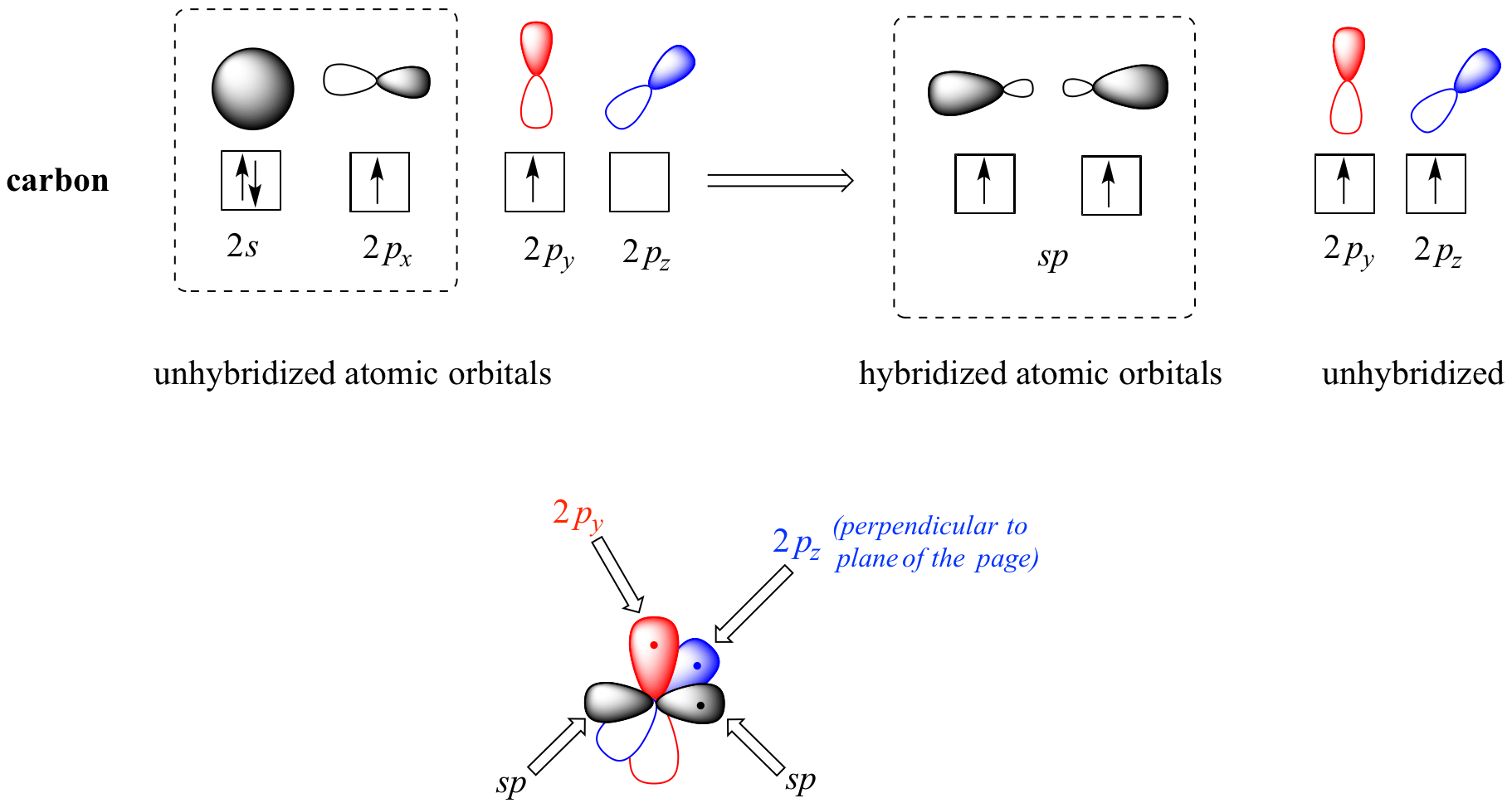
2 2 Hybrid Orbitals Chemistry Libretexts
When more than one of these waves come close together the in-phase combination of these waves produces an interaction that leads to a species that is.
. Some scientists feel that the d-orbitals lie so high in energy that they should not be treated as valence orbitals but as excited orbitals which cannot confer any appreciable stability to chemical bonds. One of these orbitals is called a bonding molecular orbital because electrons in this orbital spend most of their time in the region directly between the two nuclei. The Shape of d Orbitals.
The constructive interference causes the electron density between the two atoms to increase. Hence we can say that there are five d-orbitals. 1S 2S 2P 32244 and 59 now what actually the Habit orbitals is hybrid orbitals are actually those orbitals which are used for P Bond formation formation so we have to make the electronic configuration of sulphur in ground state so this is three years and this is a free pp ds3p contains hospitals and.
These orbitals are designated as d xy d yz d xz d x 2 y 2 and d z 2. Bonding MOs are largest in the region between the nuclei. These hybridized orbitals result in higher electron density in the bonding region for a sigma bond toward the left of the atom and for another sigma bond toward the right.
12 rows There are four types of orbitals that you should be familiar with s p d and f sharp principle diffuse and fundamental. This lowers the kinetic and potential energy of 1 or 2 electrons in the resulting bonding orbital. 5 - Bonding Orbitals and Hybridization.
Others feel that while d-orbitals are of high energy in free atoms their energy decreases as other atoms approach to make bonds. A polar covalent bond. Similar to s orbitals size and energy of p orbitals increases with an increase in the principal quantum number 4p 3p 2p.
We use one s orbital and one p orbital. This creates a dipole along the bond axisÐ Polar Covalent Bonding. Pi bonds are formed when overlapping valence orbitals laterally.
12-13 This video describes the MO diagram for HF placing emphasis on the concept of non-bonding orbitals. In basic MO theory when two atomic orbitals mix they form an in-phase bonding and out-of-phase antibonding molecular orbital. T he high electron density in this region in a filled bonding MO pulls the nuclei closer together as a result of the attraction between the.
Within each shell of an atom there are some combinations of orbitals. It is called a sigma molecular orbital because it looks like an s orbital when viewed along the H-H bond. In MO theory electrons are portrayed to move in waves.
Abstract TLDR Hybridization or the overlapping of orbitals to form new hybrid orbitals is a valuable missing piece to the understanding of covalent bonding. The primary criteria for this mixing are having the same symmetry and being near in energy. Valence Bond Theory interprets that which orbitals will be used when electrons overlap to form covalent bonds or chemical bonds.
Send contains 5 orbitals 12345 year in sulphur 3D is Venkat so this is the. It works well and gives you the extent of orbital participation in each bonding situation. A non-bonding orbital also known as non-bonding molecular orbital NBMO is a molecular orbital whose occupation by electrons neither increases nor decreases the bond order between the involved atomsNon-bonding orbitals are often designated by the letter n in molecular orbital diagrams and electron transition notations.
The magnetic orbital quantum number for d orbitals is given as -2-10 12. These hybrid orbitals are what allow atoms to form the maximum amount of covalent bonds - something that our current limited understanding of. If you mix your atomic orbitals together but find that some of the atomic.
Show activity on this post. A bonding orbital is formed when two atoms approach each other and the overlap between atomic orbitals results in constructive interference. Non-bonding orbitals are the equivalent in.
The bonding orbital is used in molecular orbital theory to describe the attractive interactions between the atomic orbitals of two or more atoms in a molecule. Nonidentical atoms will not share electrons equally. Sigma bonds are formed by head-to-head overlapping of valence orbitals.
In the n1 shell you only find s orbitals in the n2 shell you have s and p orbitals in the n3 shell you have s p and d orbitals and in the n4 up shells you find all four types of orbitals. Now as for the choice of a software to visualize orbitals I personally use Gabedit web link attached. This answer is not useful.
They will in general look nothing like the bonding or antibonding orbitals or lone pairs that you learn about in school and which which many people use to reason through chemical problems. There are two types of overlapping bonds which are sigma bonds and pi bonds.
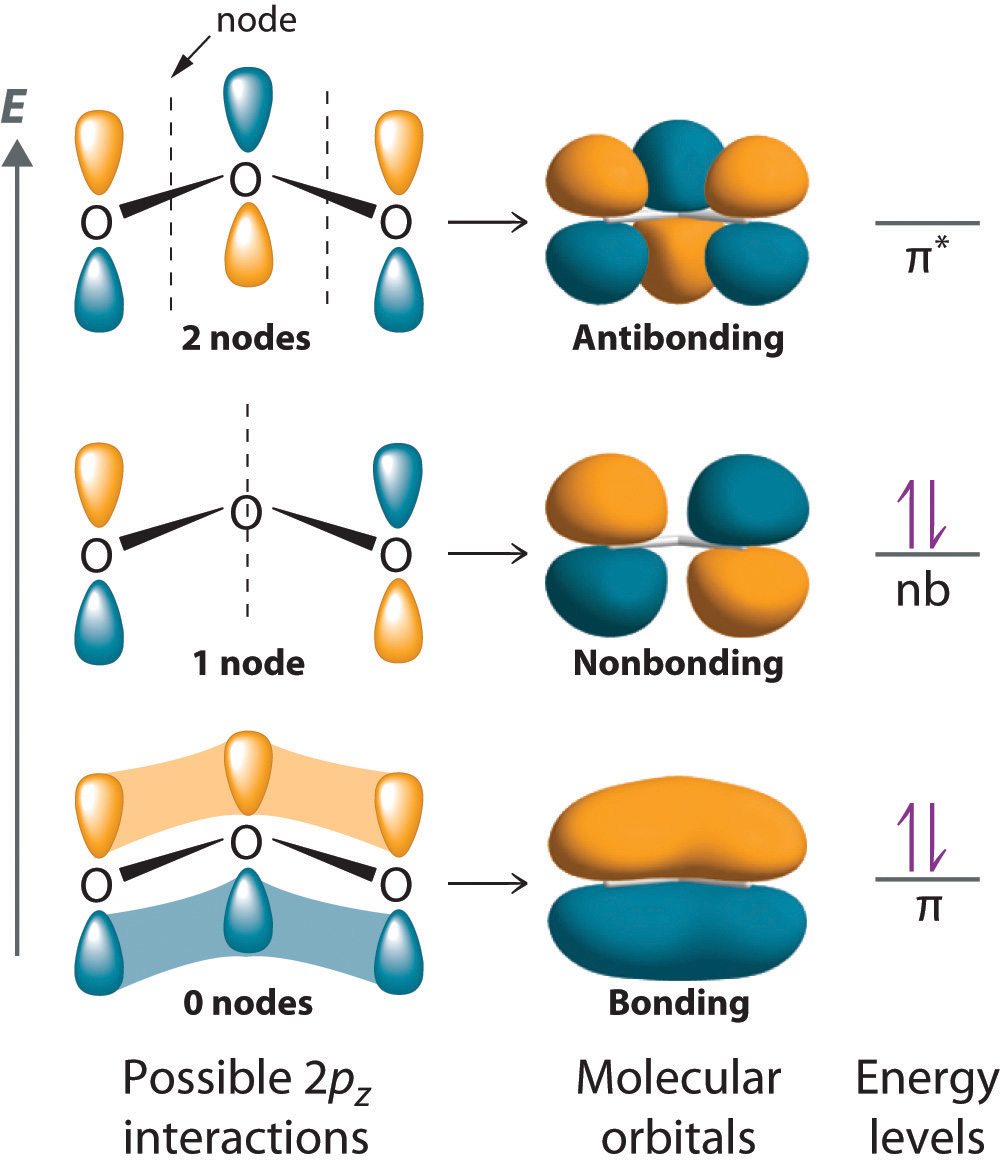
Polyatomic Systems With Multiple Bonds
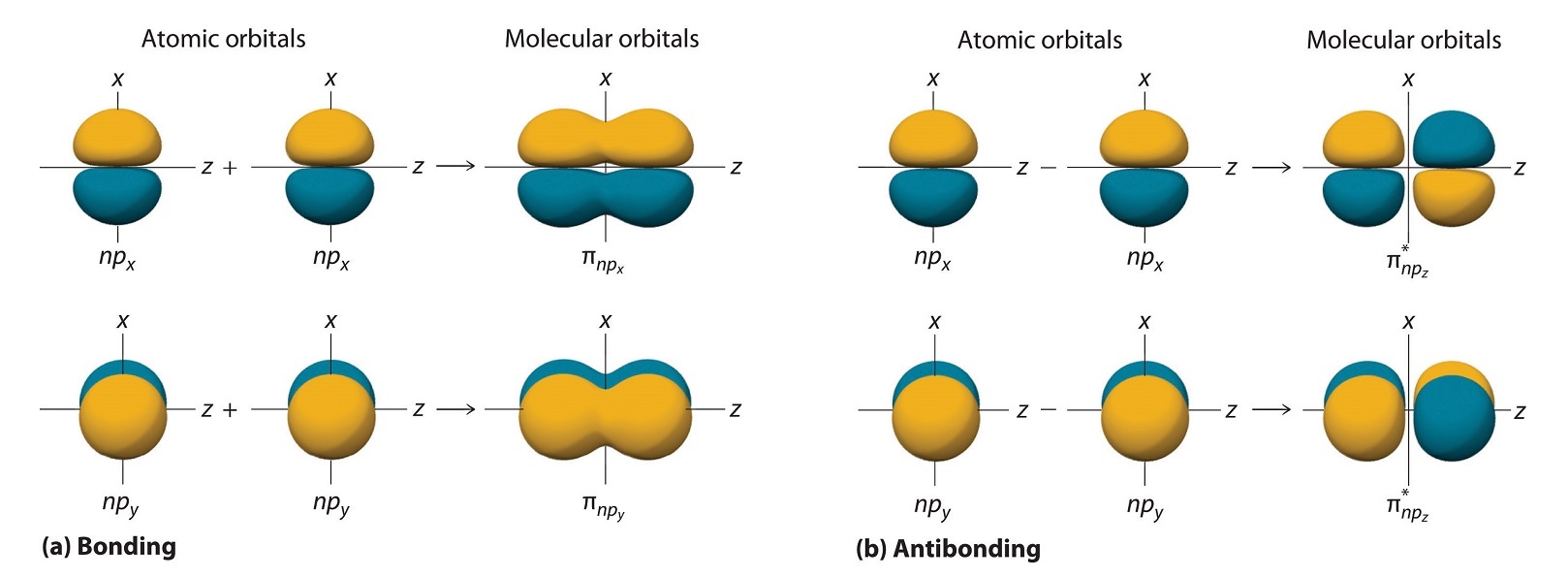
27 Molecular Orbitals With Higher Energy Atomic Orbitals Extra Lecture Chemistry Libretexts
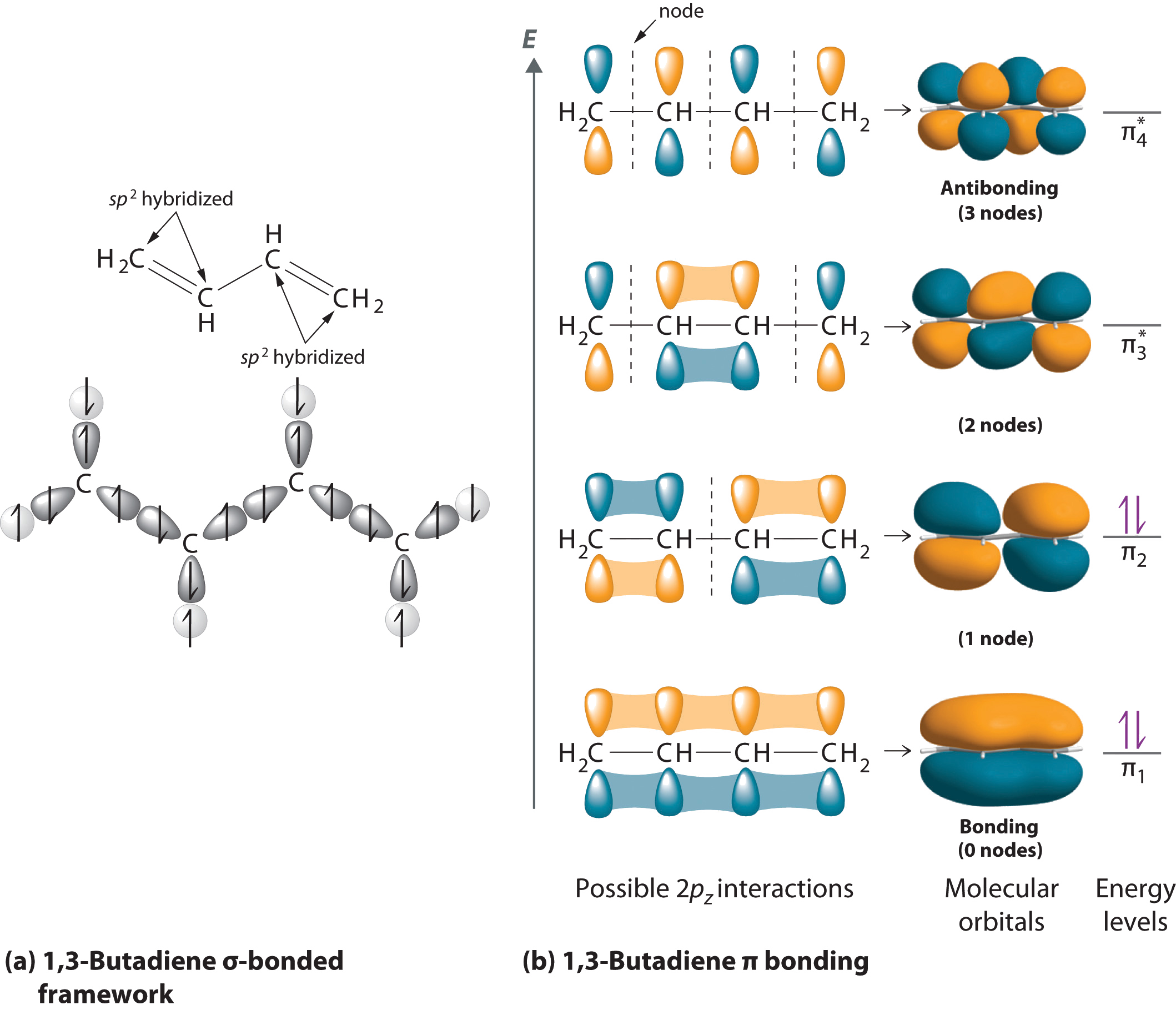
10 7 Multiple Bonding And Molecular Orbitals Chemistry Libretexts



0 Comments